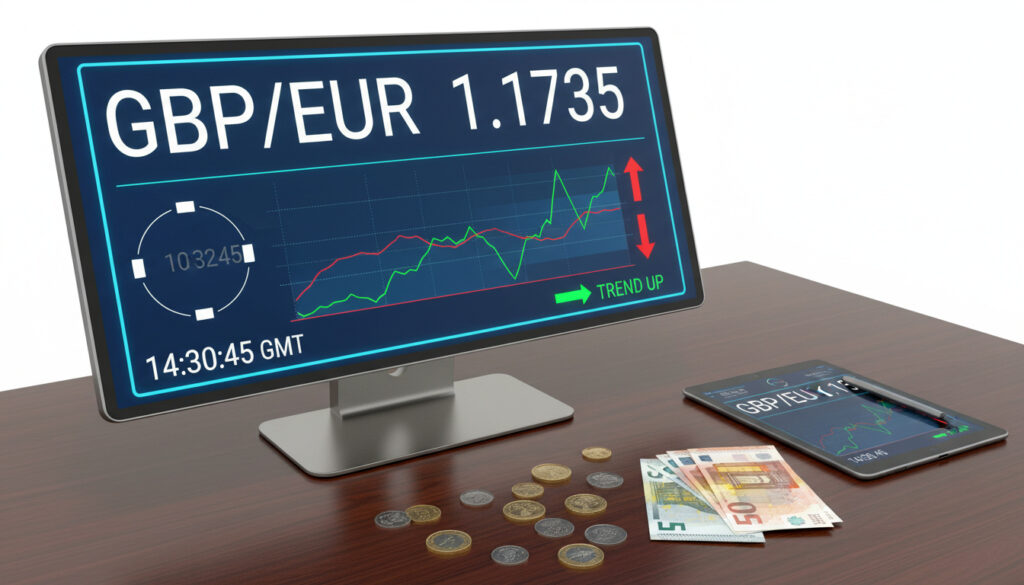
Pound to Euro Exchange Rate – Aktuell Växelkurs och Prognos
Sterling-Euro Cross: Navigating Current Market Dynamics
The pound-to-euro exchange rate remains acutely sensitive to divergent monetary policy trajectories between the Bank of England and the European Central Bank. Currency movements reflect ongoing adjustments in interest rate expectations, with each central bank responding to distinct inflationary pressures within their respective economies. Traders monitor the cross for signals regarding relative economic resilience as policymakers navigate post-pandemic normalization.
Market Grid
Current valuations respond to a complex matrix of inputs. UK labour market tightness continues exerting upward pressure on sterling, while eurozone manufacturing weakness creates offsetting headwinds. The Office for National Statistics reports trade balance fluctuations that directly impact currency demand, particularly in service sectors where Britain maintains competitive advantages. Volatility metrics suggest heightened sensitivity to unexpected inflation prints from either jurisdiction.
Strategic Insights
Interest rate differentials predominantly drive short-term movements. When the Bank of England maintains a hawkish stance relative to the ECB, capital flows typically favor sterling assets, appreciating the cross. Conversely, signs of UK economic slowing can trigger rapid reversals. Market data indicates correlation between gilt yields and sterling strength, particularly during periods of fiscal policy uncertainty. Energy price dynamics also weigh heavily, given divergent exposure levels between British and continental European economies.
Rate Comparison Framework
| Factor | Sterling Impact | Euro Impact |
|---|---|---|
| Interest Rate Hikes | Appreciation pressure | Relative depreciation |
| Energy Price Shocks | Moderate negative | Severe negative |
| Trade Surplus Growth | Limited direct effect | Structural support |
Policy Details
Quantitative tightening procedures at the Bank of England involve active gilt sales that occasionally distort currency markets through liquidity effects. The ECB’s transmission protection mechanism, designed to prevent eurozone fragmentation, indirectly affects euro liquidity conditions. Foreign exchange reserves management across emerging market economies increasingly incorporates these crosses, amplifying momentum during trending periods. Settlement systems processing pound-euro transactions report elevated volumes during monetary policy announcement windows.
Chronology of Influences
Recent quarters witnessed significant repricing as markets discounted divergent recession probabilities. Initial expectations of synchronized global tightening gave way to recognition that the UK faces distinct supply-side constraints compared to the eurozone. Financial market analysis suggests that autumn budget statements and EU fiscal rule negotiations created temporary volatility spikes. Seasonal tourism flows generate predictable summer demand for euros, while year-end repatriation effects occasionally support sterling.
Clarifying Rate Mechanics
Retail exchange rates substantially deviate from interbank benchmarks due to operational spreads. The Bank for International Settlements documents how payment processing costs create persistent wedges between wholesale and consumer rates. Cross-border transaction timing introduces settlement risk, particularly for large property purchases or business invoices. Forward contracts allow hedging against adverse movements, though premium costs reflect interest rate differentials between the currencies.
Economic Analysis
Import-dependent sectors face margin compression when sterling depreciates rapidly against the euro. Conversely, export-oriented manufacturers gain competitive pricing advantages within continental markets. Tourism operators adjust packaging costs based on prevailing rates, affecting destination choices for UK travelers. Foreign exchange analysis indicates that small and medium enterprises often lack sophisticated hedging strategies, leaving them exposed to quarterly reporting volatility. Real estate investment flows between London and continental capitals demonstrate significant currency sensitivity.
Market Perspectives
“The cross has become increasingly reactive to relative rather than absolute monetary policy shifts. We are watching wage data closely, as labour cost differentials will likely determine the next significant trend.”
Senior Currency Strategist, London Trading Desk
Summary
The pound-to-euro exchange rate reflects ongoing monetary policy divergence between the UK and eurozone economies. Short-term movements correlate strongly with interest rate expectations and energy market developments. Businesses engaged in cross-border commerce should monitor post-Brexit economic arrangements alongside traditional macroeconomic indicators. Understanding the spread between interbank and retail rates remains essential for optimizing international transactions.
Frequently Asked Questions
Why do retail exchange rates differ from the interbank rate?
Retail providers incorporate operational costs, regulatory capital requirements, and profit margins into their pricing, creating spreads that typically range between one and three percent above wholesale benchmarks during normal market conditions.
How do interest rate decisions affect the pound-euro cross?
Higher relative interest rates attract capital seeking yield appreciation, increasing demand for that currency. When the Bank of England raises rates while the ECB pauses, sterling typically strengthens against the euro as investors rebalance portfolios toward pound-denominated assets.
What role does Brexit play in current exchange rate volatility?
Trade friction adjustments and regulatory divergence continue injecting uncertainty premiums into sterling valuations. Periodic disputes regarding Northern Ireland protocol arrangements or fisheries rights create short-term risk-off sentiment affecting the cross.
Mas articulos relacionados
 Sara Carbonero pelo corto: mullet, pixie y flequillo 2025
 Laura Rubio La Voz: historia, canción y boda con Pablo López
 Qué es un Ciberataque – Tipos, ejemplos y prevención 2025
 Cruceros por el Mediterráneo 2026: MSC, Costa y Royal Caribbean
 Cómo hacer captura de pantalla en Mac: atajos y consejos
 Hotel Santo Domingo Madrid – Ubicación, opiniones y reservas
 Es Malo el Café Para Ti – Beneficios, Riesgos y Dosis Segura Según la Ciencia
 Cómo hacer mayonesa casera: receta fácil paso a paso